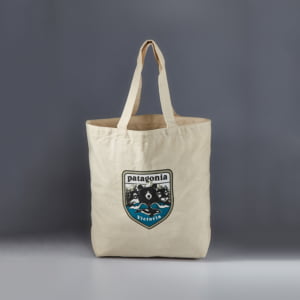
A practical framework for thinking beyond upfront unit price when evaluating reusable bag programs at scale
One of the most understandable mistakes in reusable bag planning is also one of the most common.
A buyer receives a few quotes, compares the unit prices, checks a few key specifications, and naturally leans toward the lowest acceptable cost. On paper, that can look disciplined. Sometimes it is. But in many real bag programs, the lowest-looking price at the beginning does not produce the strongest result over time.
The issue is not that price does not matter. Of course it matters. The issue is that unit price alone is too narrow a way to judge a reusable bag program, especially when that program is expected to influence customer behaviour, support sustainability goals, improve presentation, or perform well across repeated use at scale.
A reusable bag should not be evaluated only as a purchased item.
It should be evaluated as something with a life after delivery.
That is where the real comparison begins.
A low unit price can hide a higher program cost
When buyers compare only the upfront unit price, they often ask one number to stand in for too many things at once.
They ask it to represent durability, usability, repeat use, replacement risk, customer satisfaction, perceived value, and long-term brand visibility. But one number cannot do all of that work honestly.
Two bag programs can look similar at the quotation stage and behave very differently once they enter the field.
One may cost less per unit but lead to weaker reuse, earlier disappointment, lower perceived value, or more replacement friction. Another may cost more upfront but support stronger retention, better user confidence, smoother repeat ordering, and a longer practical life.
When that happens, the cheaper program is not necessarily the lower-cost program in any meaningful sense.
It is simply the lower entry price.
The better question is not only “What does this bag cost?” but “What does this bag go on to do?”
That small shift in thinking changes the whole evaluation.
A reusable bag program usually exists to support something larger than the bag itself. It may be trying to reduce reliance on single-use bags, improve the take-home experience, support customer reuse, strengthen a retail brand, fit an institutional procurement cycle, or contribute to sustainability reporting.
So the comparison has to widen.
Not only: what is the cost per bag?
But also: what is the likely outcome per bag?
Once the buyer begins comparing likely outcomes rather than only purchase price, the conversation becomes more honest. A cheaper bag that is less likely to be reused is no longer automatically the better buy. A slightly more considered bag that remains useful and visible for longer may begin to show stronger value.
This is where long-term thinking starts to matter.
Cost, reuse, and value are related, but they are not the same thing
It helps to separate the three.
Cost is the visible starting point: unit price, total order value, freight, packaging, and procurement complexity.
Reuse is what happens after distribution: whether the recipient actually continues using the bag in ordinary life.
Long-term value is the broader return created when the bag remains useful, visible, aligned with the brand, and worth keeping over time.
Most buyers compare the first category carefully and the other two more loosely. That is understandable. Cost is immediate and measurable. Reuse and long-term value unfold more gradually. But that does not make them less important. It only makes them easier to overlook.
And that is often where weaker decisions begin.
A practical framework for comparing reusable bag programs
We find it useful to evaluate a bag program across five lenses rather than one.
1. Upfront program cost
This is still the right place to begin. Buyers should compare the real delivered cost clearly and honestly.
That means looking beyond the quoted unit price to include production, freight, packaging, timing, and any process complexity that affects the total purchase.
A bag is never truly inexpensive if it creates avoidable problems elsewhere.
2. Expected reuse confidence
This is the first question that moves beyond the quote sheet.
How likely is the bag to be reused in ordinary life?
Will it feel strong enough, useful enough, attractive enough, and worth keeping? Will the size suit real use? Will the customer trust it with the kinds of items they normally carry? Will the construction support repeat handling, or begin to feel tired too early?
A bag program becomes stronger when the answer to those questions is yes.
3. Functional life in the field
A bag does not need to fail completely to lose value.
Sometimes its practical life shortens because it feels less stable than expected. Sometimes it remains technically intact but falls out of use because the shape is awkward, the styling feels too promotional, or the overall bag no longer inspires confidence.
That still counts as performance loss.
The better comparison is not only how long the bag survives, but how long it remains worth using.
4. Brand and experience value after purchase
This matters more than many procurement teams first assume.
A bag that stays in use continues representing the store, institution, museum, campus, or brand long after the original transaction. It keeps creating impressions. It keeps extending the experience. It keeps the brand present in ordinary life.
That ongoing visibility has value, especially when the bag feels refined enough that people are comfortable carrying it publicly and repeatedly.
At that point, the bag becomes more than packaging. It becomes part of the brand environment.
5. Operational continuity
At scale, a bag program also has to work operationally.
Can it be reordered smoothly? Does the supplier relationship support continuity? Is the construction stable enough to repeat year after year? Can the bag be specified, approved, and replenished without unnecessary friction?
Long-term value is not only about the end user. It is also about whether the program becomes easier to sustain.
A bag program that works well once but is difficult to repeat is weaker than it first appears.
One useful measure: cost per meaningful use
One of the most practical ways to think about value is this:
What is the cost per meaningful use?
Not just cost per unit. Cost per meaningful use.
A bag that costs less but is reused only a little may deliver poorer value than a bag that costs more and remains in active circulation for much longer. The difference does not have to be dramatic to matter. Even modest improvements in retention and reuse can meaningfully change the overall value picture.
This becomes even more important when the program is tied to broader objectives, such as behaviour change, sustainability goals, better retail presentation, or premium brand positioning.
A bag is usually a small line item inside a much larger purpose.
That is why it should be judged in relation to the purpose, not in isolation from it.
The right bag depends on the job it has to do
Simple price comparisons can also mislead because different bag programs are trying to achieve different things.
A grocery program may care most about repeat-use confidence, carrying comfort, and reduced replacement friction. A museum gift shop may care more about perceived value, visual alignment, and the take-home experience. A university program may care about dependable annual supply, procurement ease, and broad adoption. A premium retail brand may care about whether the bag feels worthy of the product it carries.
Those are not identical jobs.
So the best-value bag will not always look the same across categories. A lower-cost construction may be entirely appropriate in one context and false economy in another. A more elevated design may be necessary in one environment and unnecessary in another.
Value becomes clearer when the bag is judged against the real purpose of the program.
Better comparisons usually require a little more honesty at the beginning
Most experienced buyers already sense this.
They know the lowest price is not always the safest decision. They know some products look efficient at purchase and underperform later. They know a program that disappoints in the field can become expensive in quieter ways: weaker reuse, lower confidence, softer brand impact, more internal frustration, less enthusiasm for reordering.
The difficulty is not usually lack of awareness.
The difficulty is that those outcomes are harder to summarize neatly than a unit price.
That is why it helps to ask a slightly better set of questions at the start. What is this bag program actually trying to achieve? What kind of reuse behaviour do we want to support? How long do we realistically want the bag to remain in active use? What will make it feel worth keeping? Which simplifications are safe, and which ones would quietly weaken the result?
Those questions take a little longer. But they usually protect the program from shallow decisions.
A stronger bag program is often not the cheapest one, but the clearest one
That may be the most useful conclusion.
The best bag program is not necessarily the one with the highest specification or the lowest quote. It is usually the one where the buyer has become clear about the purpose, the real use conditions, the intended life after distribution, and the trade-offs worth making.
That kind of clarity leads to better buying.
It also leads to more defensible buying, because the decision can be explained in terms of outcomes rather than only input cost. That matters for procurement teams, sustainability teams, retail teams, and anyone else involved in evaluating the program internally.
When the thinking is better, the value comparison becomes better.
Closing thought
A reusable bag program should be judged not only by what it costs to order, but by what it goes on to do.
Does it get reused?
Does it stay in circulation?
Does it support the brand, the customer experience, or the institutional goal it was meant to support?
Does it make the next ordering cycle easier rather than harder?
Those are the questions that reveal long-term value.
The unit price still matters.
It is simply not the whole story.
CTA: Reviewing a bag program and want a second set of eyes?
We help retailers, institutions, museums, grocery programs, and other organizations think through bag decisions more practically — not only around cost, but around likely reuse, durability, presentation, and long-term program value.
If you are comparing options now, we would be happy to review your current thinking, specification, or quote direction.
Talk to us about your bag program
Or send us your current concept, requirements, or pricing direction for feedback